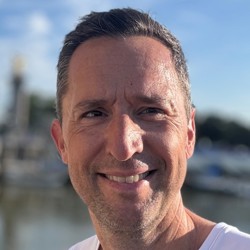
Anders Wanhainen
Professor (Chair) of Vascular Surgery and Deputy Head, Department of Surgical Sciences

Uppsala University
Sweden
Anders Wanhainen, MD, PhD, is Professor (Chair) of Vascular Surgery and Deputy head of the Department of Surgical Sciences, Uppsala University, Sweden. He also serves a permanent Guest Professor of Vascular Surgery at Umeå University, Sweden.
Professor Wanhainen is a general and vascular surgeon specializing in advanced open and endovascular surgery of complex aortic disease.
He has served as president of the Swedish Society for Vascular Surgery and as Councilor of the European Society for Vascular Surgery (ESVS). He is currently Chair of the ESVS Guidelines Steering Committee, and has chaired the ESVS Aortic Guidelines Writing Committees for the 2019, 2024, and 2026 ESVS guidelines. He is also a member of the European Reference Network on Rare Multisystemic Vascular Diseases (VASCERN).
Professor Wanhainen’s research focuses on the epidemiology and clinical management of aortic diseases, with special focus on pathophysiology, screening, open and endovascular surgical repair, and medical therapy. Additional research interests include vascular graft and endograft infections and connective tissue disorders. He is the principal investigator of several clinical trials.
He has authored more than 400 scientific articles and textbooks chapters, has an H-index 68, and has been an invited speaker at more than 150 international meetings and congresses. He is the supervisor for 35 PhD-students, 26 of whom have successfully completed their doctoral degree.
Talks
09:40 to 09:50
Guidelines vs reality: Where evidence fails in Type B aortic dissection
Anders Wanhainen, University of Uppsala, Sweden
Anders Wanhainen11:35 to 12:15
Strategy & Future Scoping Roundtable
Lead discussant: Tim Resch, University of Copenhagen, Denmark
Expert panel: Anders Wanhainen, Stéphan Haulon, Nimesh Desai, Eric Roselli, Tara Mastracci, Kak Khee Yeung
- Remote monitoring in aortic dissection
- Is remodelling for chronic dissection important and, if so, how can we achieve it?
- Functional and haemodynamic assessment of the dissected aorta, with potential AI integration
- Endovascular technologies in connective tissue disease
16:25 to 16:40
When treatment creates the next problem
- Distal stent-induced new entry (dSINE): Kak Khee Yeung, University of Amsterdam, Netherlands
- Extensive aortic coverage and altering stiffness: Anders Wanhainen, University of Uppsala, Sweden
Other Speakers

Federica Catapano
Assistant Professor of Radiology and Diagnostic Radiologist
Humanitas University and Cardiovascular Imaging Unit at IRCCS Humanitas Research Hospital
Milan, Italy

Becky Sandford
Consultant Vascular Surgeon
Guy's & St Thomas' NHS Foundation Trust
London, UK